Project Perceive
Sensor Fusion
Modern operations are constrained by fragmented sensing architectures that provide incomplete or delayed awareness of the operational environment. Data is often collected in isolation, requiring manual correlation across platforms, domains, and classification levels. This creates gaps in detection, slows decision-making, and limits the ability to act with precision.
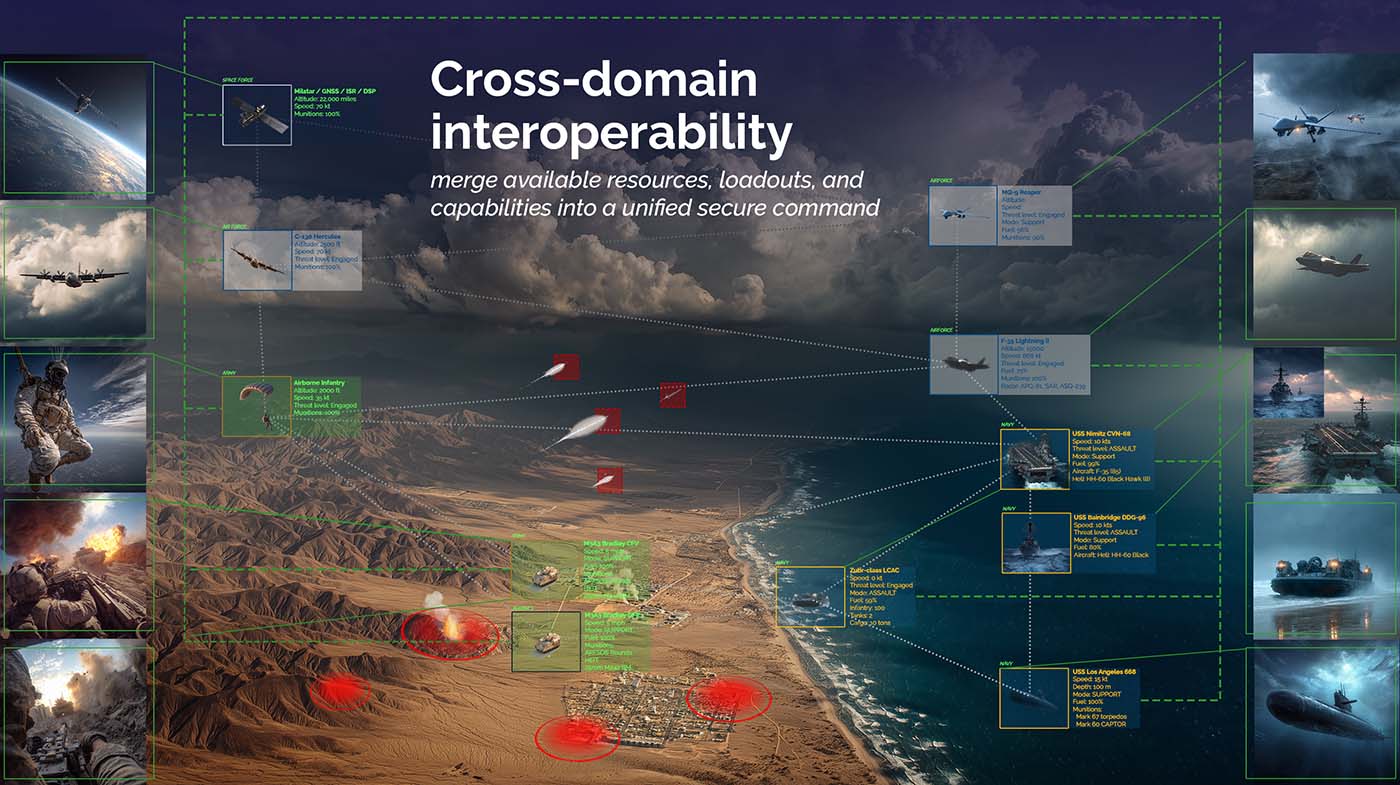
This mission area focuses on delivering persistent, multi-modal sensing fused into a coherent operational picture. By integrating data from disparate sources such as RF, optical, acoustic, and seismic sensors, the system builds a unified representation of the environment in near real time. Advanced processing techniques, including photonic sensing and edge-based inference, enable detection of low-signature and emerging threats that are otherwise difficult to observe.
The architecture emphasizes distributed, low-SWaP deployment, allowing sensors to operate across contested and denied environments without reliance on centralized infrastructure. Outputs are structured for immediate use by operators and systems, supporting targeting, navigation, force protection, and mission planning.
The result is a persistent perception layer that enhances situational awareness, reduces uncertainty, and enables forces to understand the environment before the adversary can exploit it.